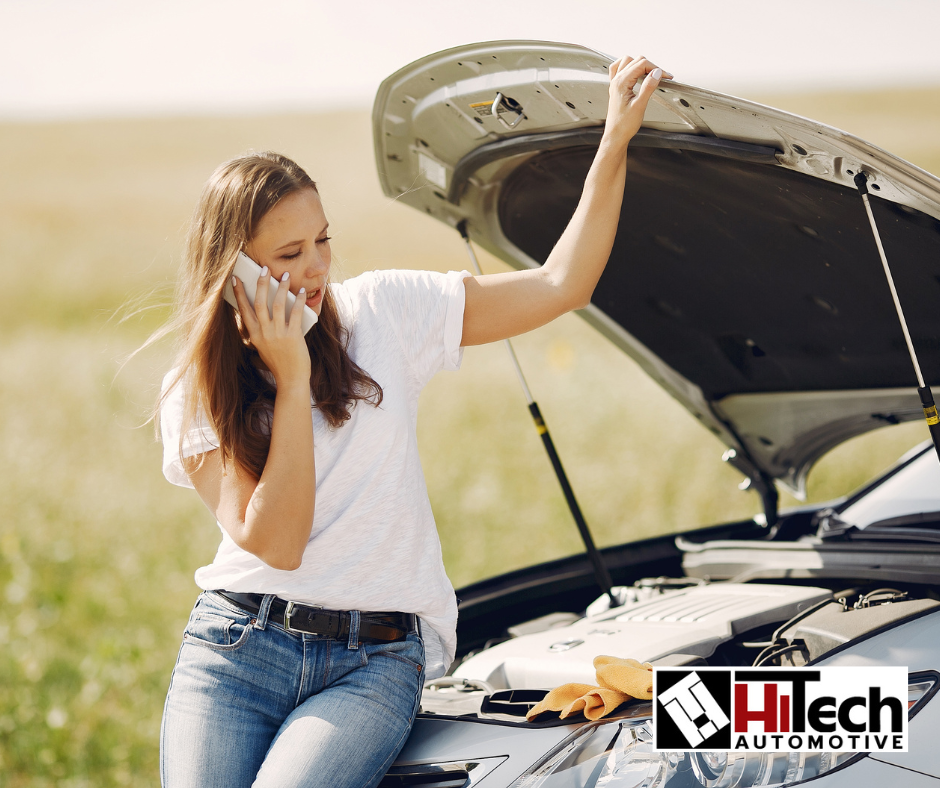
If your engine is overheating, it’s important to address the problem immediately. An overheating engine can lead to costly repairs, unexpected breakdowns, and even complete engine failure if left untreated. Fortunately, your vehicle will often provide warning signs before serious damage occurs. By recognizing these symptoms early, you can protect your investment and avoid being stranded on the side of the road.
At HiTech Automotive, we help drivers identify cooling system problems before they become major repair bills. Here are seven common signs that your engine is overheating and what you should do if you notice them.
1. Rising Temperature Gauge
Your dashboard temperature gauge is one of the first indicators that your engine is overheating.
Most vehicles operate within a normal temperature range. If the gauge begins climbing toward the red zone or remains higher than usual, your cooling system may not be functioning properly.
Common causes include:
- Low coolant levels
- A faulty thermostat
- Radiator problems
- Cooling fan failure
- Water pump issues
Never ignore a temperature gauge that consistently reads higher than normal.
2. Steam Coming from Under the Hood
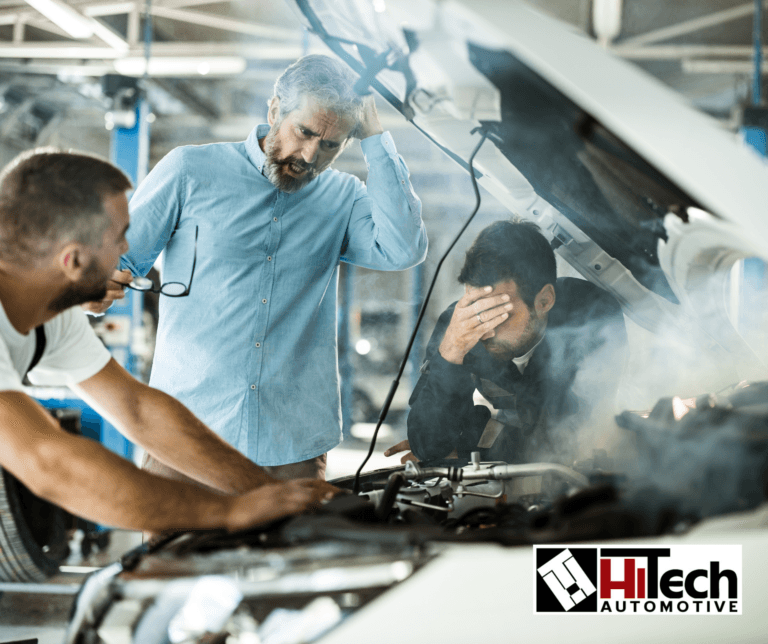
Steam escaping from beneath the hood is one of the most obvious warning signs that your engine is overheating.
As coolant temperatures rise beyond safe operating limits, pressure builds within the cooling system. This can cause coolant to boil and escape through weak points or vents.
If you see steam:
- Pull over safely.
- Turn off the engine.
- Allow the vehicle to cool completely.
- Avoid opening the radiator cap while hot.
Continuing to drive can result in severe engine damage.
3. Coolant Leaks
A properly functioning cooling system depends on maintaining adequate coolant levels. Leaks can quickly reduce cooling efficiency and cause temperatures to rise.
Signs of a coolant leak may include:
- Bright green, orange, pink, or yellow fluid beneath the vehicle
- Low coolant reservoir levels
- Sweet-smelling odors
- Frequent need to add coolant
Even small leaks can eventually cause major overheating problems if left unrepaired.
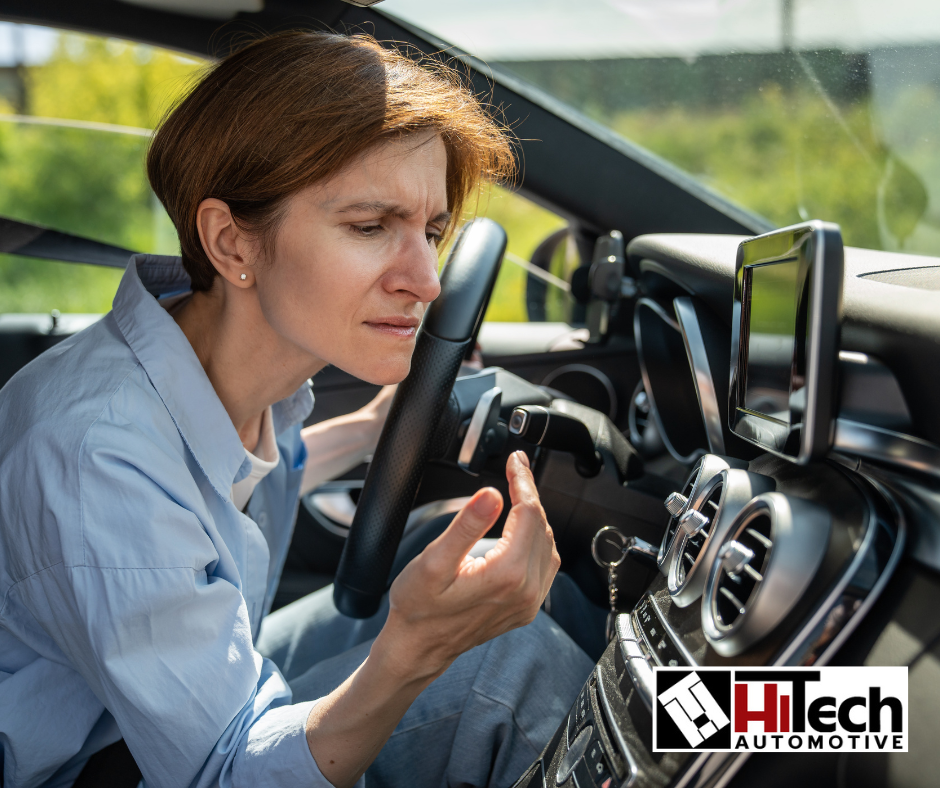
4. Unusual Smells
When an engine is overheating, unusual odors often develop.
You may notice:
- A sweet smell from leaking coolant
- Burning oil odors
- Burning plastic or rubber smells
These smells can indicate that fluids or engine components are being exposed to excessive heat. Prompt diagnosis can help prevent further damage.
5. Reduced Engine Performance
An overheating engine may begin to lose efficiency and performance.
Drivers often notice:
- Sluggish acceleration
- Reduced power
- Engine hesitation
- Poor fuel economy
Many modern vehicles enter a protective “limp mode” when the engine is overheating. This safety feature reduces power output to help minimize damage until repairs can be made.
6. Knocking or Ticking Sounds
Strange engine noises should never be ignored.
When temperatures become excessively high, engine oil can lose its ability to properly lubricate moving parts. Increased friction can create sounds such as:
- Knocking
- Pinging
- Ticking
These noises may indicate that internal engine components are under stress. Immediate attention is recommended to avoid costly repairs.
7. Dashboard Warning Lights
Modern vehicles use sensors to monitor engine temperature and cooling system performance.
Warning lights that may appear include:
- Temperature warning light
- Check Engine Light
- Coolant level warning light
If any of these indicators appear alongside rising temperatures, it’s possible your engine is overheating and requires professional inspection.
Common Causes of Overheating
Several issues can cause excessive engine temperatures.
Low Coolant
Coolant absorbs and transfers heat away from the engine. Insufficient coolant levels can significantly reduce cooling efficiency.
Faulty Thermostat
The thermostat regulates coolant flow. A thermostat stuck closed can prevent coolant circulation and rapidly increase temperatures.
Radiator Problems
A clogged, leaking, or damaged radiator may struggle to dissipate heat effectively.
Cooling Fan Failure
Cooling fans help move air through the radiator. If a fan stops working, overheating can occur, especially in slow-moving traffic.
Water Pump Issues
The water pump circulates coolant throughout the engine. A failing water pump can severely impact cooling performance.
Why Immediate Repairs Matter
When an engine is overheating, delaying repairs can have serious consequences.
Potential damage includes:
- Blown head gaskets
- Warped cylinder heads
- Cracked engine blocks
- Damaged pistons
- Complete engine failure
The longer temperatures remain elevated, the greater the risk of extensive and expensive repairs.
For additional information about vehicle cooling systems and safety, visit the National Highway Traffic Safety Administration.
Trust HiTech Automotive for Cooling System Repairs
If your engine is overheating, don’t wait until minor issues become major problems. The experienced technicians at HiTech Automotive can diagnose cooling system concerns and provide the repairs needed to keep your vehicle running safely.
Whether the issue involves a coolant leak, faulty thermostat, radiator problem, or water pump failure, our team is here to help. Schedule an inspection today by clicking here, and let HiTech Automotive restore your vehicle’s performance and reliability before overheating causes serious damage.