Your vehicle is constantly communicating with you—even if it’s not speaking out loud. One of the most common and important ways your car talks to you is through the dashboard lights. These little icons might not seem like much at first glance, but each dashboard light is designed to alert you to a specific issue with your vehicle. Whether it’s a reminder for routine maintenance or a serious mechanical warning, knowing what these lights mean can save you time, money, and possibly even your safety.
At HiTech Automotive, we believe every driver should feel confident behind the wheel. And part of that confidence comes from understanding the warning signs your car gives you—starting with your dashboard.
The Purpose Behind Dashboard Lights
Every modern vehicle comes equipped with a network of sensors and computer systems that monitor the performance and safety of your car. When something isn’t functioning as it should, the system sends a signal to your instrument panel in the form of a dashboard light. These lights come in different colors and symbols, each representing a different system or alert level.
Typically, red lights indicate a serious issue that needs immediate attention, yellow or orange lights signal caution or required maintenance, and green or blue lights are informational, such as when your high beams are on.
Understanding what each light means allows you to take the appropriate action—whether that’s stopping the car right away or scheduling a service appointment.
Common Dashboard Lights and Their Meanings
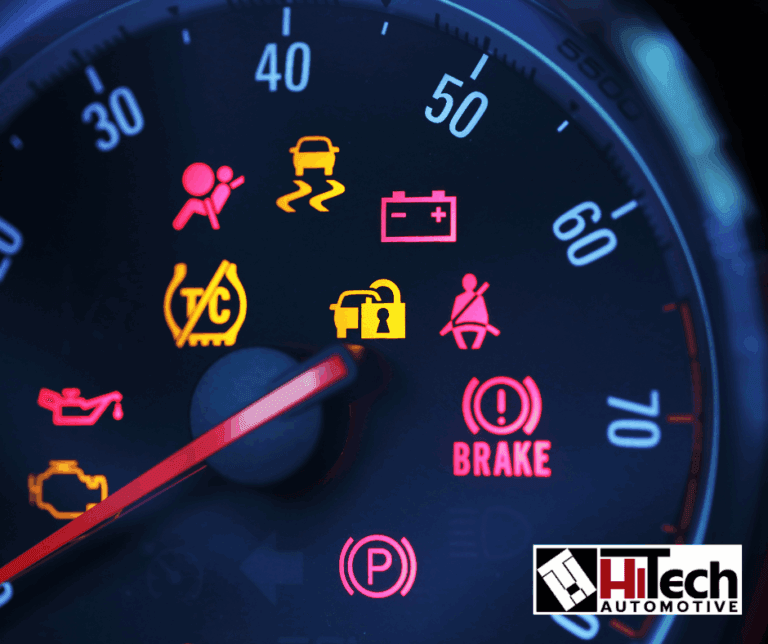
Here are the most common dashboard lights you might encounter and what they usually mean:
1. Check Engine Light
Usually shaped like an engine block, this light can mean anything from a loose gas cap to a serious engine malfunction. If the light is steady, schedule a diagnostic soon. If it’s flashing, it could indicate a critical misfire or other urgent problem—pull over and call for assistance.
2. Oil Pressure Warning
This red oil can symbol tells you that your engine oil pressure is low. It could mean you’re low on oil or that the oil pump isn’t circulating enough oil. Continuing to drive with this light on can severely damage your engine. Stop and check your oil level immediately.
3. Battery Alert
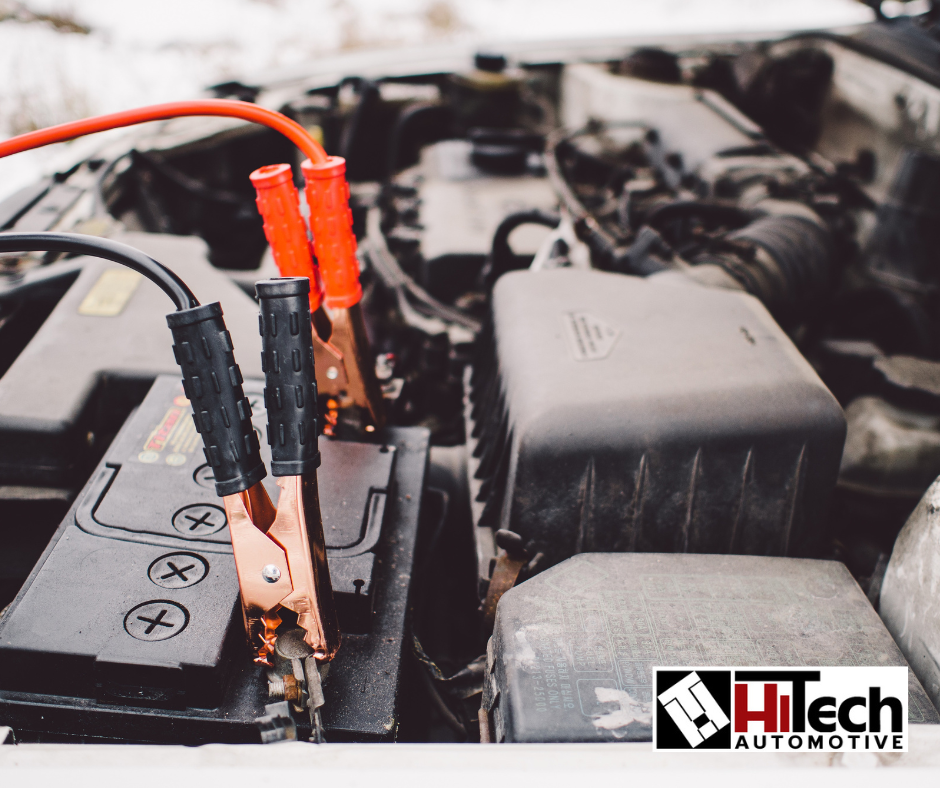
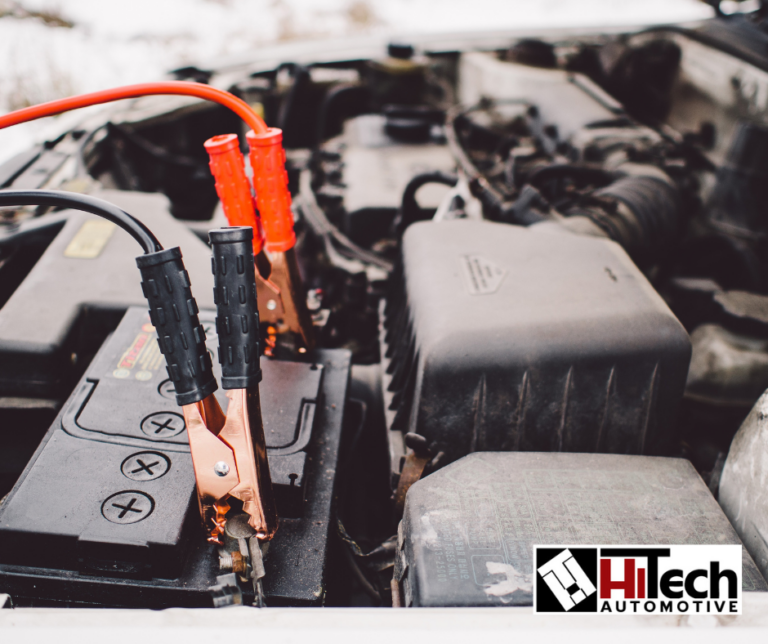
A red battery icon signals a charging issue. The battery itself may be faulty, or the alternator could be failing. If this light comes on while driving, you may have limited time before your car loses power. Visit HiTech Automotive as soon as possible to check your charging system.
4. Brake System Warning
This light may appear as the word “BRAKE” or a circle with an exclamation mark. It could mean the parking brake is engaged, brake fluid is low, or there’s a serious brake system failure. Don’t take any chances—brakes are essential to your safety.
5. Tire Pressure Monitoring System (TPMS)
This symbol looks like a horseshoe with an exclamation mark. It means at least one tire is under-inflated. Check your tire pressure and fill to the manufacturer’s recommendation. Driving on low tires can lead to blowouts or uneven wear.
6. Temperature Warning Light
A red thermometer icon means your engine is overheating. Pull over and shut off the engine immediately. Do not attempt to open the radiator cap while the engine is hot. Once cooled, check your coolant level or have a technician inspect the cooling system.
7. Airbag Warning Light
This icon often looks like a seated person with a circle in front of them, representing an airbag. If it stays on, your airbags may not deploy in a crash, which is a serious safety risk. Bring your car in for diagnostics to make sure the system is working.
8. Anti-Lock Braking System (ABS) Warning
The ABS light means the system designed to prevent your wheels from locking during braking is not functioning properly. Regular brakes will still work, but your ability to brake safely on slippery surfaces could be compromised.
9. Traction Control Light
This light, often depicted as a car with squiggly lines, indicates the traction control system is either active or has a fault. If it stays on, there may be an issue with wheel sensors or the control module.
10. Maintenance Reminder
Usually shaped like a wrench or showing a “Service” message, this light reminds you to get routine maintenance like oil changes or inspections. Don’t ignore it—preventative care can keep your car running smoothly and help avoid more expensive repairs.
Why You Shouldn’t Ignore Dashboard Lights
A flashing dashboard light is your vehicle’s way of crying out for help. Ignoring it can lead to reduced performance, lower fuel efficiency, or serious safety hazards. Even if the car feels like it’s driving fine, the problem may be lurking under the hood.
At HiTech Automotive, our team of certified technicians uses state-of-the-art diagnostic equipment to quickly identify what triggered a warning light. We believe in transparent, honest service—so you’ll always know what’s going on and what your options are.
When in Doubt, Check It Out
Not all dashboard lights mean your vehicle is in imminent danger, but they should never be ignored. Some alerts are simple reminders, like checking your oil or inflating your tires, but others are early warnings of bigger issues that can cause major damage or put you at risk.
When a dashboard light comes on and you’re unsure of the cause, bring your vehicle to HiTech Automotive. We’ll perform a thorough diagnostic check and get you back on the road with peace of mind.
Your Dashboard is Your First Line of Defense
Think of your dashboard like a health monitor for your car. It’s designed to keep you informed and protect both you and your vehicle. Knowing what each dashboard light means—and what actions to take—helps ensure that small problems don’t become big ones.
Trust HiTech Automotive to keep your car in top shape. Whether you’re dealing with a warning light or just want to schedule regular maintenance, our expert team is here to help. Schedule an appointment today by clicking here.