There’s nothing more frustrating than turning on your vehicle’s air conditioning on a hot day and realizing it’s no longer blowing cold air. A properly functioning AC system is essential for comfort, especially during summer driving. At HiTech Automotive, we often help drivers diagnose why their systems suddenly stop producing cold air and what steps are needed to restore performance.
Your car’s air conditioning system is made up of several components working together to deliver cold air into the cabin. When even one part fails, the entire system can struggle. Understanding the most common causes can help you recognize warning signs early and prevent more expensive repairs.
1. Low Refrigerant Levels
One of the most common reasons your AC stops blowing cold air is low refrigerant. Refrigerant is the chemical responsible for absorbing heat from inside your vehicle and releasing it outside. If the refrigerant level drops too low, the system cannot properly cool the air.
Unlike engine oil, refrigerant does not get “used up.” If it’s low, there is usually a leak somewhere in the system. Leaks can develop in hoses, seals, or connections over time. Simply refilling the refrigerant without fixing the leak may provide temporary cold air, but the issue will likely return.
A professional AC inspection includes checking for leaks, repairing damaged components, and recharging the system to manufacturer specifications.
2. Failing AC Compressor
The compressor is the heart of your air conditioning system. It pressurizes the refrigerant and keeps it circulating. If the compressor fails, the system won’t be able to produce cold air at all.
Signs of compressor trouble may include unusual noises when the AC is turned on, warm air blowing from the vents, or the compressor clutch not engaging. In some cases, electrical problems or worn internal components can cause compressor failure.
Because the compressor is a major component, addressing issues early can sometimes prevent complete failure and reduce repair costs.
3. Clogged or Damaged Condenser
The condenser’s job is to release heat absorbed by the refrigerant. It is typically located at the front of the vehicle near the radiator. If the condenser becomes clogged with debris, dirt, or road grime, it can’t efficiently remove heat from the system.
A damaged or blocked condenser can reduce cooling performance and prevent the system from producing cold air. In some cases, stones or road debris may puncture the condenser, leading to refrigerant leaks.
Keeping the front of your vehicle clean and scheduling regular inspections can help prevent condenser-related issues.
4. Electrical Problems
Modern air conditioning systems rely heavily on electrical components, including sensors, relays, switches, and control modules. A blown fuse, faulty wiring, or malfunctioning sensor can interrupt the system’s ability to deliver cold air.
For example, if the cooling fans fail due to an electrical issue, the refrigerant may not cool properly. Likewise, problems with the climate control system inside the cabin can affect airflow and temperature regulation.
Electrical diagnostics require specialized tools and expertise. At HiTech Automotive, our technicians use advanced diagnostic equipment to pinpoint electrical faults quickly and accurately.
5. Blocked Cabin Air Filter
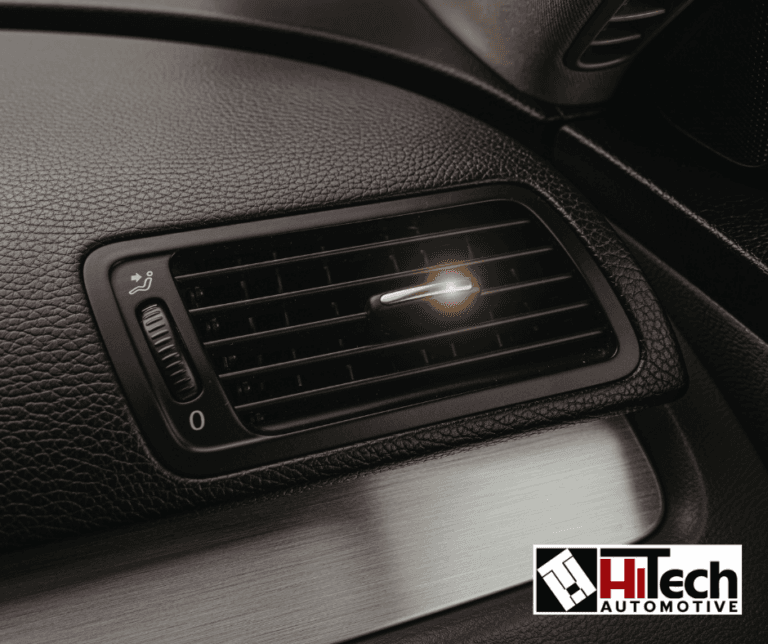
Sometimes, the issue isn’t the AC system itself but restricted airflow. A clogged cabin air filter can limit the amount of air passing through your vents, making it seem like your vehicle isn’t producing cold air.
If airflow feels weak or you notice musty odors when the AC runs, the cabin filter may need replacement. This is a relatively inexpensive fix that can significantly improve airflow and comfort.
Most manufacturers recommend replacing the cabin air filter every 15,000 to 30,000 miles, depending on driving conditions.
6. Expansion Valve or Orifice Tube Issues
The expansion valve or orifice tube regulates the amount of refrigerant entering the evaporator. If this component becomes clogged or malfunctions, it can disrupt the cooling process and reduce the production of cold air.
Symptoms may include inconsistent temperatures, frost buildup on AC components, or fluctuating airflow. Because these parts are integral to system pressure regulation, professional service is recommended if they fail.
7. Evaporator Problems
The evaporator is responsible for absorbing heat from the air inside your cabin. If it develops leaks or becomes contaminated with mold and debris, the system may struggle to produce cold air.
Evaporator issues are less common but can be costly due to the component’s location inside the dashboard. Regular maintenance and prompt attention to unusual smells or reduced cooling performance can help prevent extensive damage.
Why Prompt AC Repairs Matter
Driving without cold air isn’t just uncomfortable—it can also indicate underlying system problems that may worsen over time. Ignoring minor AC issues can lead to larger, more expensive repairs down the road.
According to the National Highway Traffic Safety Administration, vehicle maintenance plays a key role in overall safety and reliability. Ensuring your AC system functions properly contributes to driver comfort and focus, especially during long drives in hot weather.
If your vehicle’s AC isn’t blowing cold air like it used to, it’s best to have it inspected sooner rather than later. Early diagnosis often means simpler and more affordable repairs.
Schedule Your AC Inspection Today
At HiTech Automotive, we provide comprehensive air conditioning diagnostics and repair services. From refrigerant leaks to compressor replacement, our experienced technicians can restore your system’s ability to deliver cold air efficiently and reliably.
Don’t let a malfunctioning AC system disrupt your comfort. If you notice warm airflow, unusual noises, or reduced performance, schedule an inspection with HiTech Automotive and get back to enjoying cool, refreshing cold air on every drive by clicking here.